

A car is constantly faced with roads of every kind, on which the torque the engine is able to generate needs to be modulated. On its own, the engine cannot let the vehicle tackle climbs, corners and straights the way the driver wants. This is what the gearbox is for: a mechanism that allows the driver to modulate torque according to need. When we talk about this mechanism there are two big families, defined by the way the gear is engaged.
• Manual gearbox
• Automatic gearbox
In this article we will be looking at the:
Manual gearbox
In the image: four-speed manual gearbox from a FIAT Balilla.
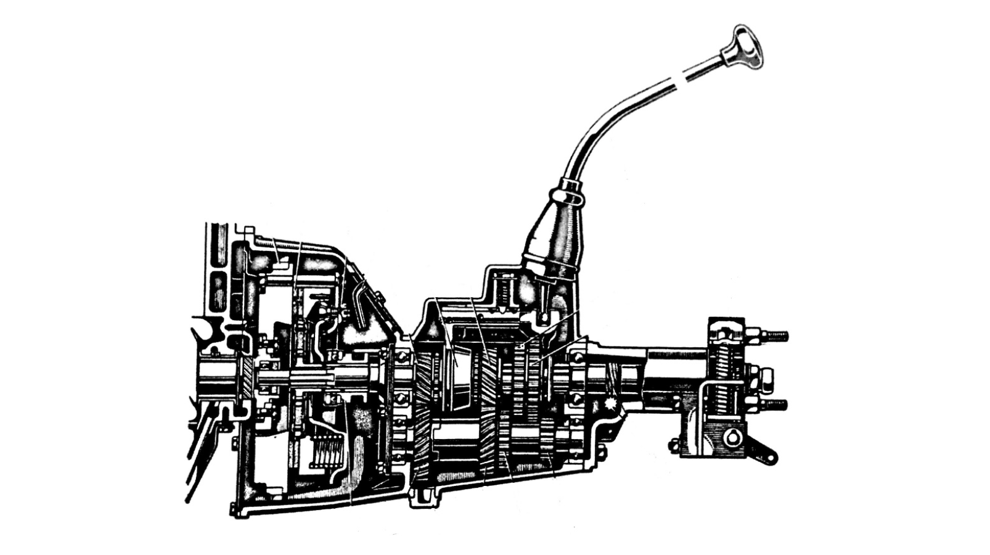
The manual gearbox is historically the first mechanism that made it possible to modulate the torque required, and it is the choice of drivers who put driving pleasure and enjoyment ahead of convenience. With this mechanism, the gear is engaged by means of the clutch, operated by its own pedal. The clutch (assembly 2-3-4) is a set of circular components installed on the gearbox input shaft by means of splines (5). In the photo: cutaway of a clutch with a diaphragm spring.
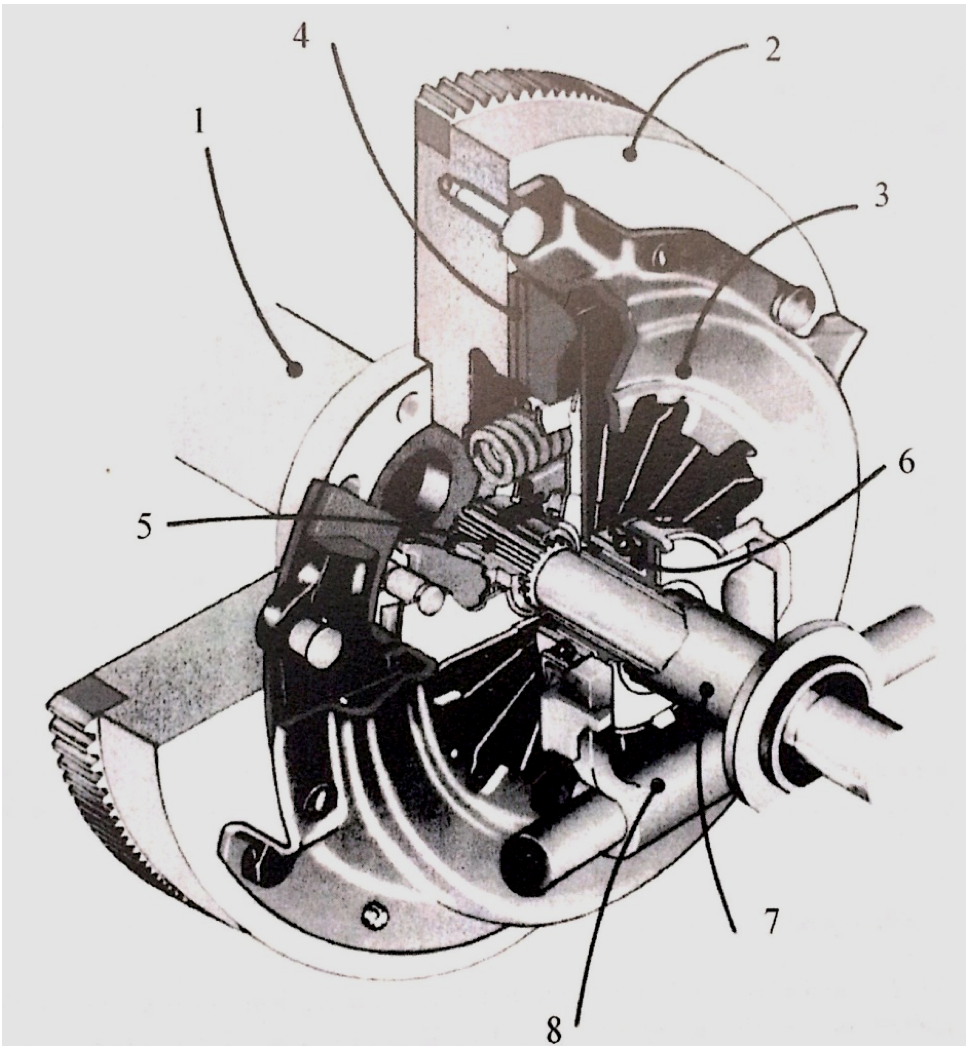
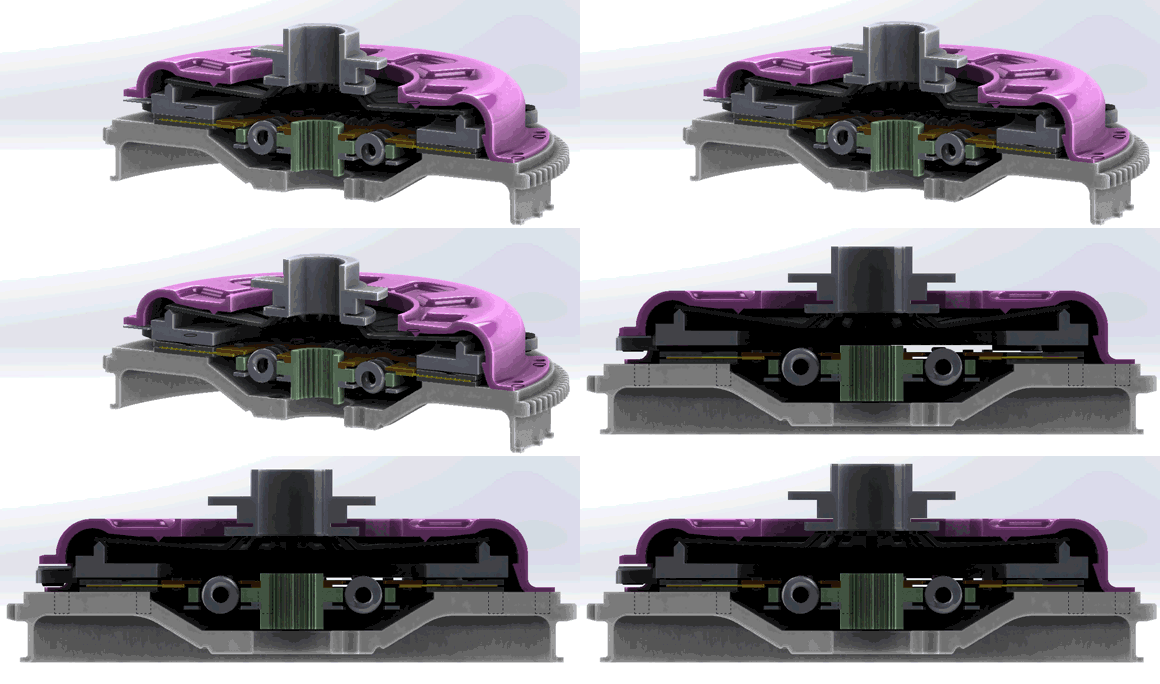
When changing gear, the driver presses the clutch pedal, which moves the release bearing (6) axially towards the crankshaft (1). As it moves, the bearing presses on the diaphragm spring (3, behind the cover fixed to the flywheel), separating the driven disc (4) from the drive disc, which is fixed to the flywheel (2). In the illustration: animation of how the clutch works.
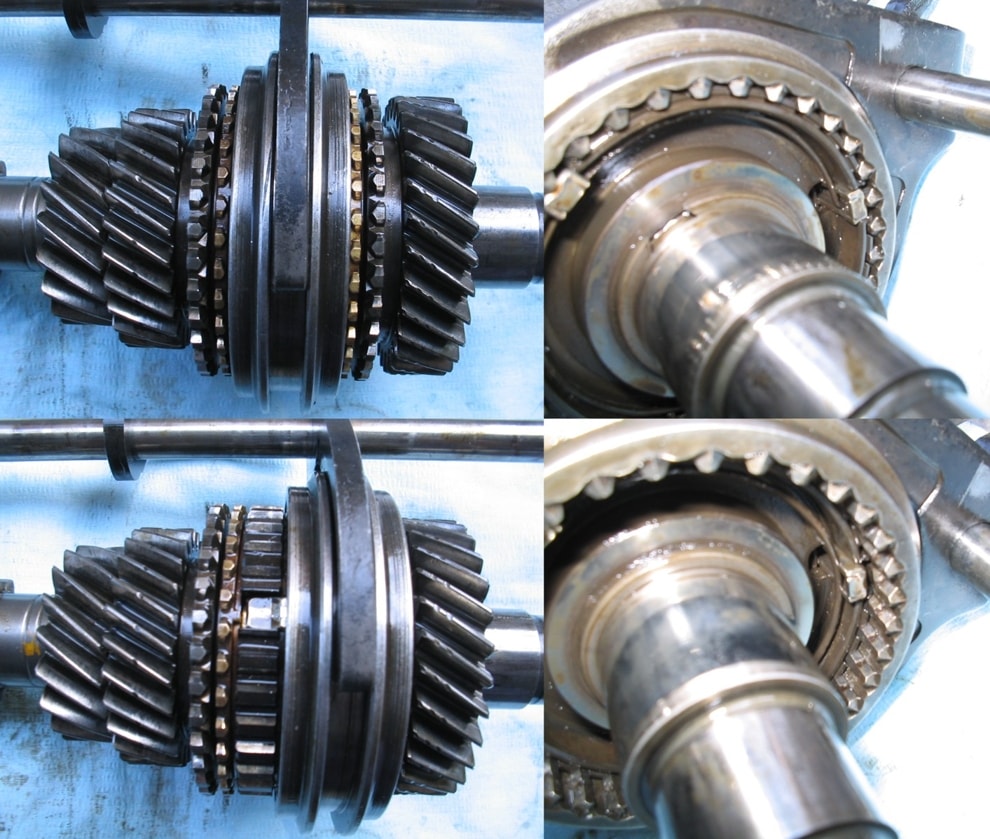
Once the driven disc is completely separated from the drive disc, the driver can change gear using the gear lever. The gear lever controls the gears and their engagement through dedicated and complex linkages. Those levers operate the synchronisers, devices installed on the gearbox output shaft that allow the motion coming from the engine to be transmitted to the driveshaft or to the differential. In the photo: synchroniser disengaged (top) and engaged (bottom).
In the illustration: animation of how the manual gearbox works.
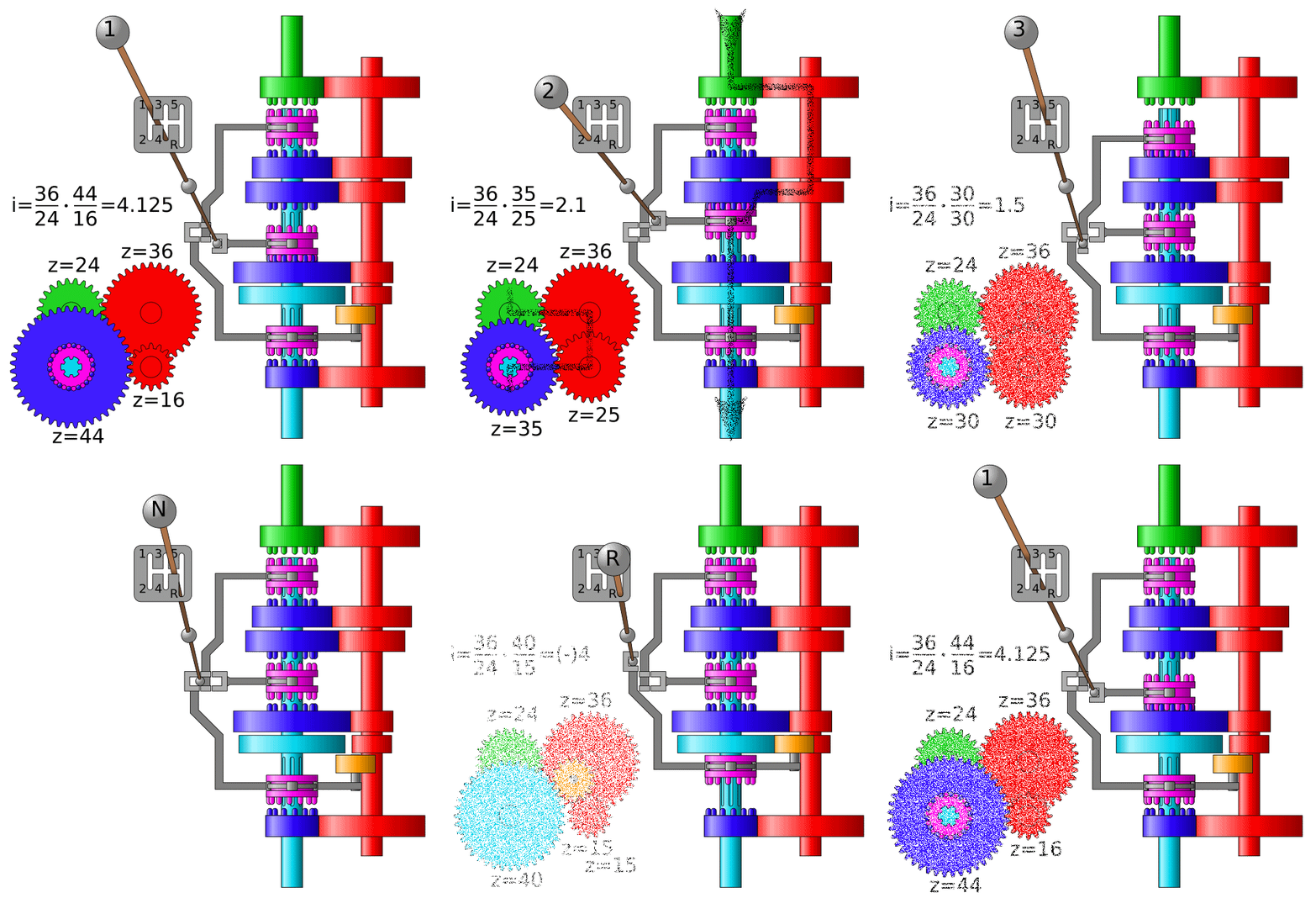
Torque is modulated through the meshing of toothed gears, whose number of teeth is chosen according to the transmission ratio required. Look at the animation: at the end of the input shaft (green) there is a gear that drives the layshaft (red). The layshaft in turn drives the output shaft (light blue) through another pair of gears, selected by the synchroniser (purple) chosen with the gear lever. As the animation shows, the number of teeth on the gears used determines the transmission ratio i. First gear multiplies the torque coming out of the engine; from there the ratio is gradually reduced, until torque is being divided down instead.
Going up a gear brings a drop in power and engine speed because of the manoeuvres involved in changing gear (lifting off the accelerator, the time it takes for the clutch to separate from the flywheel, and so on). The dual-clutch gearbox reduces those losses. This gearbox works on the principle of two clutches, installed on two output shafts coaxial with one another, which engage on the flywheel one at a time: one clutch handles the even gears, the other the odd ones. Both output shafts are always turning thanks to the layshaft, but it is the synchronisers that allow motion to be transmitted out of the gearbox. Specifically, when one gear is engaged, the synchroniser that will transmit the next gear is already engaged, ready to pass the motion on. With the evolution of electronics, dual-clutch gearboxes are operated by paddles set behind the steering wheel, which engage gears through the control unit without any need for a clutch pedal. Electronics have evolved to the point where automated dual-clutch gearboxes are possible, in other words gearboxes with no engagement controls within the driver’s reach at all, since the gear change is entirely under the control of the ECU. The manual gearbox thus becomes an automatic, even though this type of transmission, paddles included, is properly known as an automated manual gearbox.
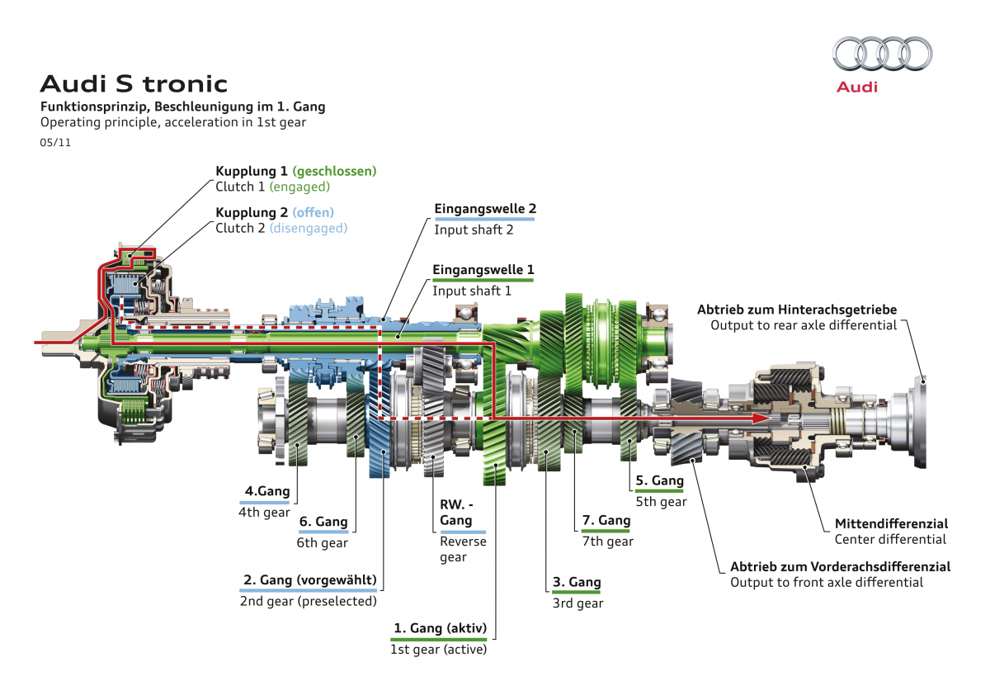
An example of a dual-clutch gearbox: the Audi S tronic
(Images taken from “L’Autotelaio – Progetto dei componenti”, by Giancarlo Genta and Lorenzo Morello, Ed. ATA)