
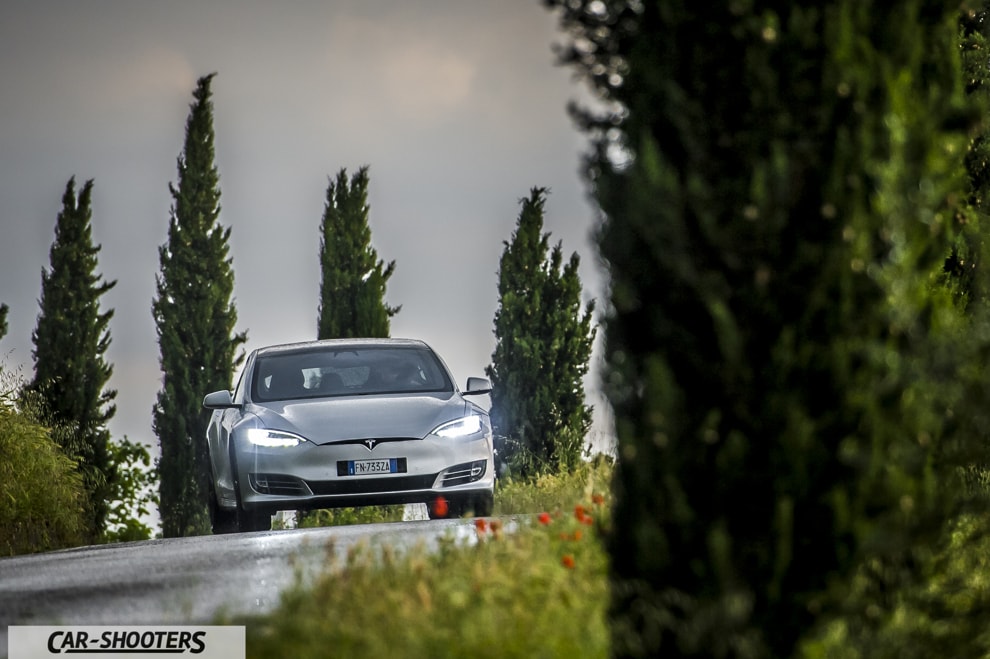
The Tesla Model S is the car that made the American manufacturer stand out to the wider motoring public in 2012, after the experimental groundwork of the Roadster.
Read our Tesla Model S review here!
By then, other better known manufacturers such as Toyota, Honda, Renault and General Motors, with its Chevrolet and Opel brands, had already begun developing cars with electric drive, either partial, alongside an internal combustion engine, or full. But Tesla presented itself to the public as the carmaker devoted solely to developing purely electric vehicles, thanks to the performance achieved with the Roadster, to a range that had been entirely electric since the company was founded, and to the features and technical solutions applied to the Model S.
Let’s look at it in detail. (In the illustration: the induction motor, the heart of the Tesla Model S)
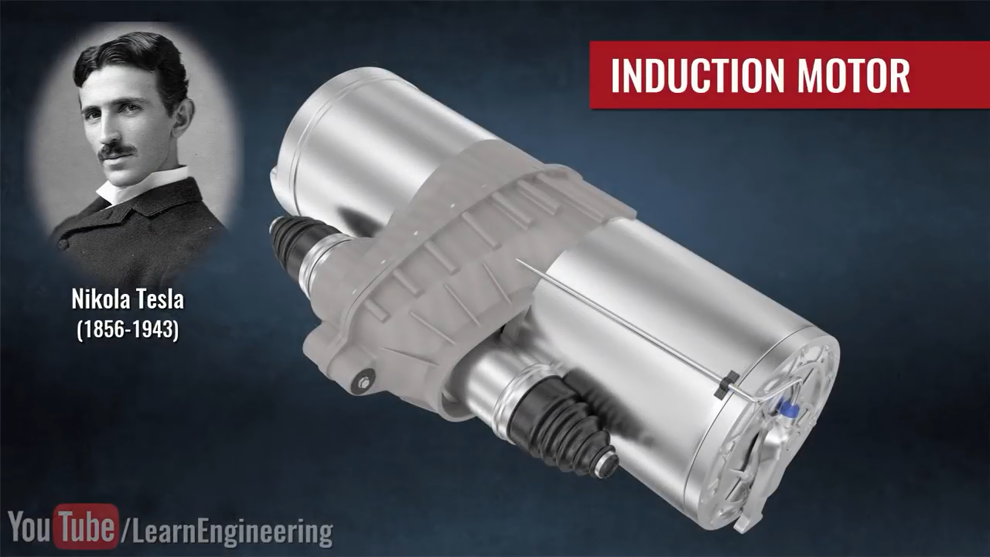
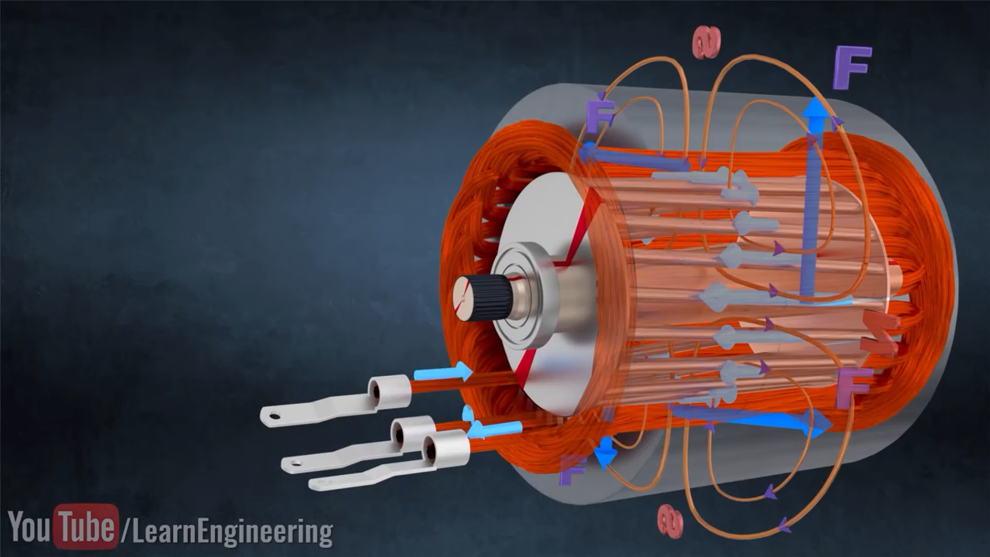
If the Tesla Model S managed to reach performance comparable to that of sports cars running on internal combustion engines, the credit goes to the induction motor, which, as it happens, is one of the solutions perfected and patented by Nikola Tesla. It works by spinning a rotor inside a stator, driven by coils installed on the stator itself and fed with three-phase alternating current. That current in the coils generates a rotating magnetic field which induces alternating current in the bars of the rotor. This produces the drive torque that turns the rotor. (In the illustration: how the induction motor works)
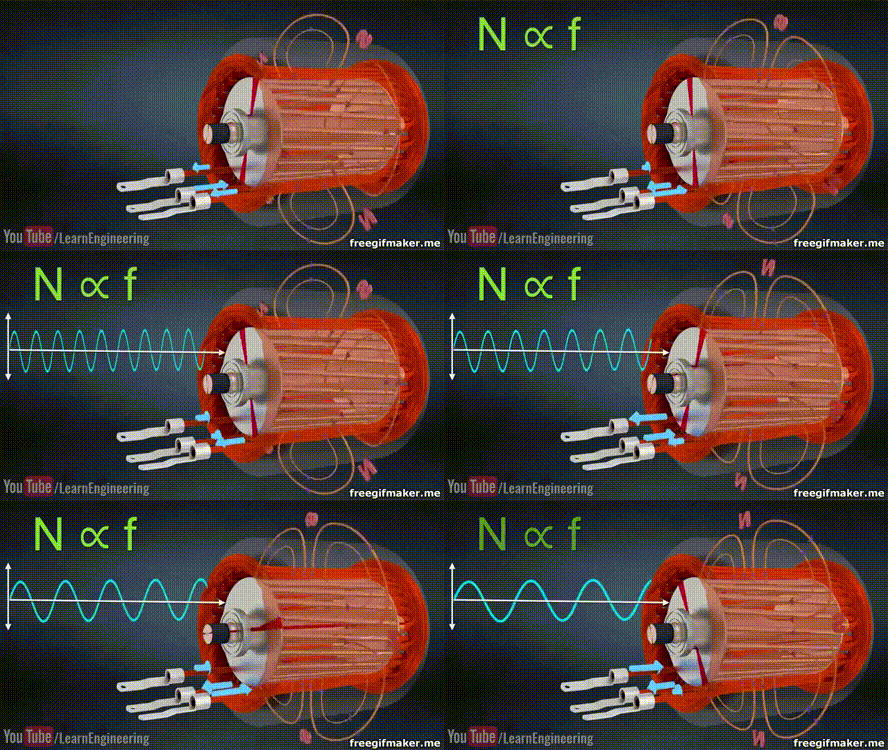
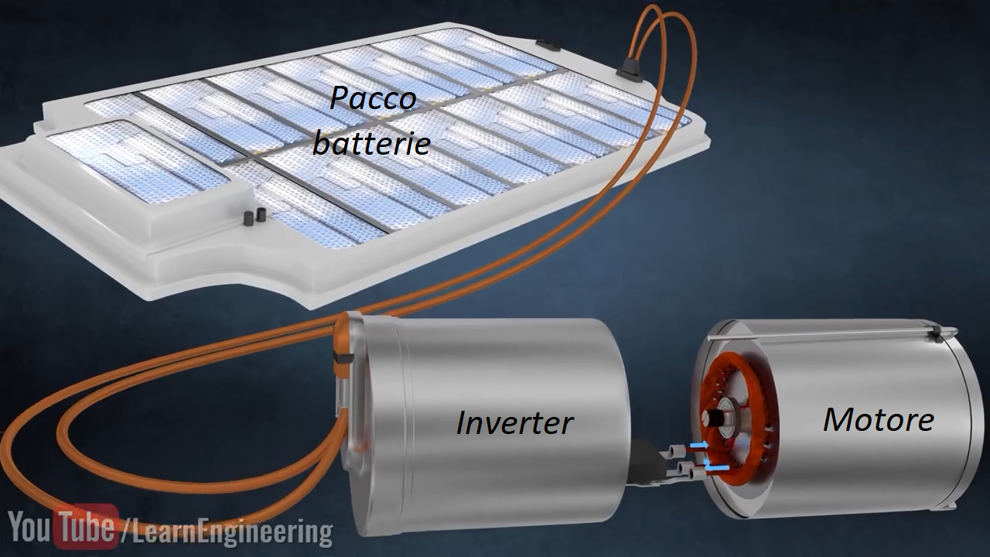
The rotation speed of the rotor is regulated by acting on the frequency of the alternating current: reducing the frequency reduces the strength of the magnetic field and, with it, the rotation speed of the rotor. The frequency and the amplitude of the current are regulated by the inverter, an electronic device under the driver’s control which also has the job of converting the direct current drawn from the battery pack into alternating current for the motor, and vice versa. (In the animation: rotor rotation speed regulated according to the frequency of the current)
(In the illustration: layout of the basic components of the Tesla Model S electrical system)
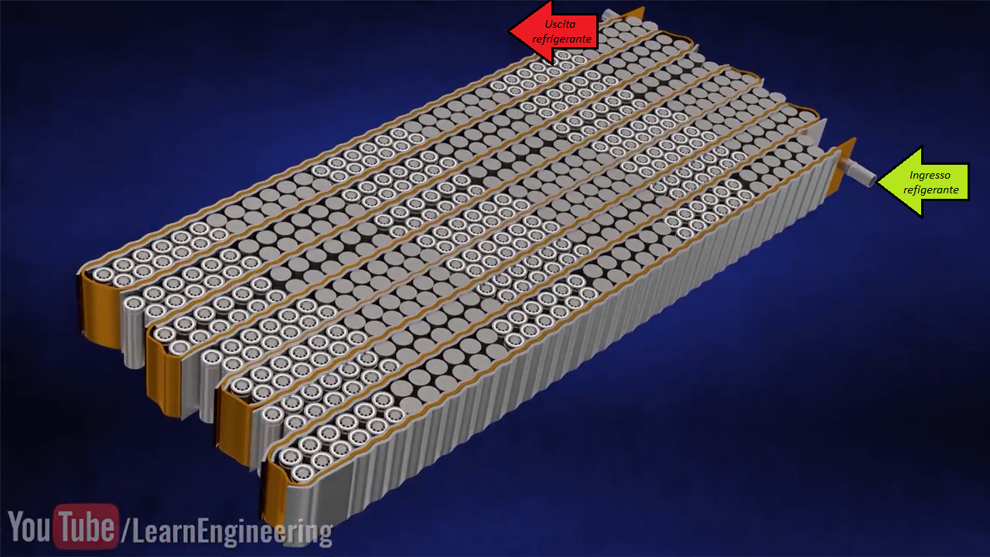
The battery pack is made up of groups of very small lithium cells, packed together as shown in the image and surrounded by metal tubes arranged between one group of cells and the next. This arrangement allows the cells to cool better, because their temperature is distributed evenly, which means a longer lasting battery. And bear in mind that the Model S uses 7000 cells, spread across 16 batteries… (In the illustration: cell layout of a battery and of the cooling system)
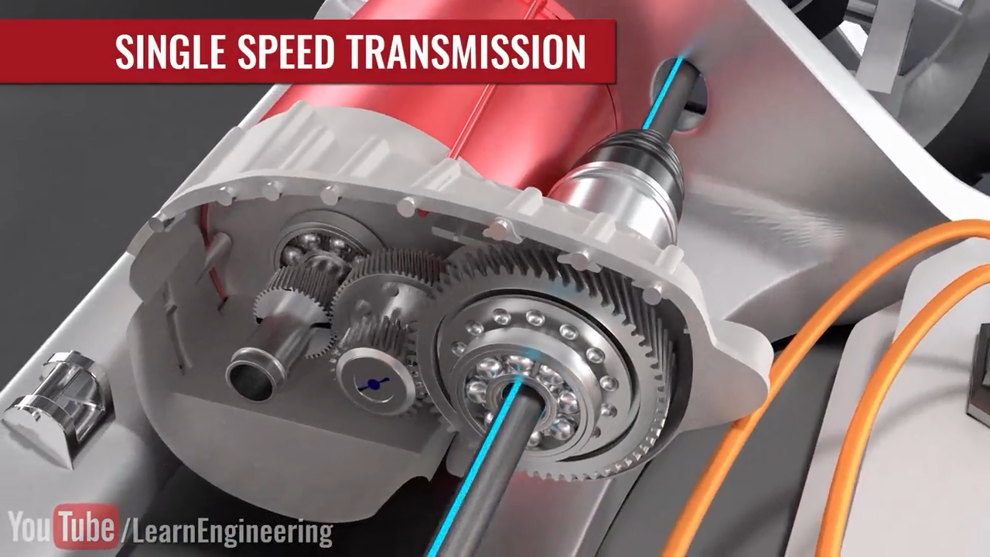
One important advantage of using an induction motor is having a power unit that stays highly efficient across the whole range of motor speeds. In internal combustion engines, torque and power are efficient only within narrow rev bands, which is why gearboxes are needed to let the engine work across wider ranges, modulating the torque and the speed it delivers according to road conditions or to the driver’s needs. In the Model S there is no need for a gearbox, and drive is transmitted straight to the wheels through a simple set of gears. (In the illustration: the continuous speed transmission system)
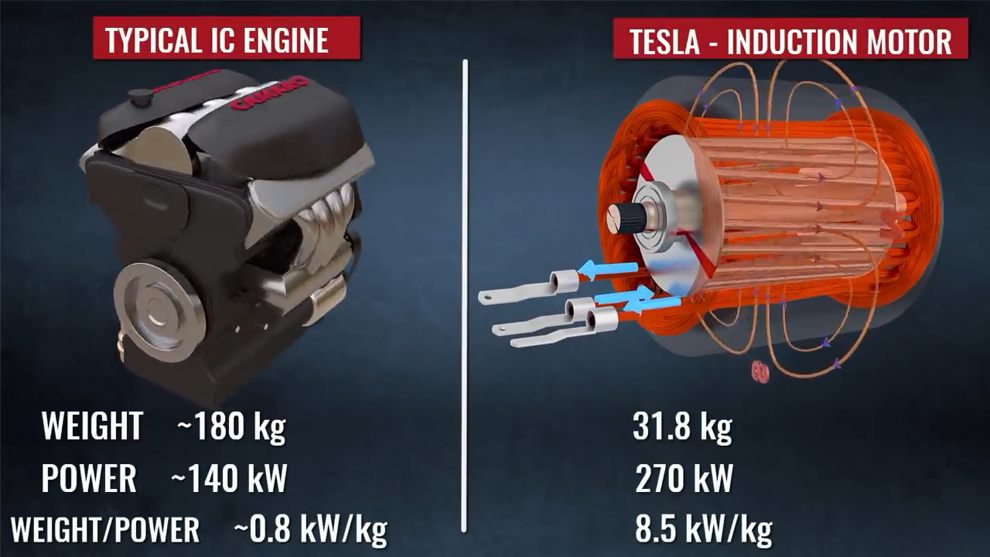
The induction motor can reverse its role and turn from a motor into a generator capable of recharging the lithium batteries. This happens during regenerative braking, which is activated as soon as the accelerator pedal is released. While the car’s wheels drive the motor, the inverter acts on the frequency of the alternating current so that the rotation speed of the magnetic field is lower than the rotation speed of the rotor. Under this key condition, far more current is generated than is used for traction, which allows the battery pack to be recharged. At the same time, an electromotive braking torque is applied to the rotor, bringing the vehicle to a stop. Thanks to electric drive, the Model S has significant advantages over internal combustion vehicles. As well as efficiency that stays high and constant across a wide range of motor speeds, the electric motor is compact and light and allows simple transmission systems that are themselves light and compact, since no conversion of motion is required as it is in combustion engines, where the reciprocating motion of the pistons has to be turned into the rotary motion of the crankshaft. Mounting the batteries in the floor lowers the car’s centre of gravity considerably, which translates into a car that is more stable through corners. The inverter makes it possible to use simple open differentials because, if one of the driven wheels slips through lack of grip, the speed of the slipping wheel can be limited by cutting the power supply through the inverter, which reacts far more quickly and immediately than an internal combustion engine can. That responsiveness makes limited slip differentials unnecessary, while open differentials transmit drive torque to the wheels with very low losses. (In the illustration: internal combustion engine and induction motor compared)