

Inline four, V6, W12. We very often hear about the number of cylinders an engine is split into when we want to know how it performs. It is a figure behind which lies a very precise technical choice, one that goes well beyond the mere impression a high value can give. A high number does not always correspond to high performance and, when it does, the reason is not as obvious as it may seem. When we talk about cylinders, by association we immediately think of displacement. The immediate assumption is that the larger the displacement, the more power the engine delivers. That is only partly true. Displacement is in fact determined by the bore (the internal diameter of the cylinder inside the engine), almost the same as the diameter of the piston (which moves inside the cylinder), and by the stroke, that is the linear distance travelled by the piston between the highest point (Top Dead Centre) and the lowest point (Bottom Dead Centre) of the cycle. It is worth remembering that, inside the engine, the piston within the cylinder converts the chemical energy of the fuel into mechanical energy through combustion. That mechanical energy is then transferred to the crankshaft, whose job is to turn the reciprocating motion of the piston into rotary motion. Of the two quantities mentioned above, it is the bore that affects the useful power the engine is able to deliver. This can be verified straight away in the Unit Power Formula:
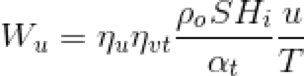
Where:
The term we are interested in for the subject we are dealing with is S, that is the area of the piston crown (its upper face), the one that determines the size of the combustion chamber when the piston reaches Top Dead Centre. And we can see straight away that useful power is directly proportional to the area S: the larger the area, the more power the engine is able to deliver. The stroke does not appear: it does not directly affect the power delivered, but it is not a quantity to be overlooked. The stroke is in fact determined by the diameter of the crankshaft: the larger its diameter, the greater its mass (and its inertia) and the greater the mechanical stresses. What is more, for a given connecting rod length, the greater the angle taken by the rod itself. The more the connecting rod is angled, the greater the thrust of the piston against the cylinder, with a consequent increase in friction losses during the reciprocating motion of the piston. Friction losses translate into lower engine efficiency. This does not mean that single-cylinder engines are the way to go. As we know (click here), with a single cylinder a balancing shaft is mandatory for balancing purposes, in order to reduce the vibrations generated at high engine speeds. Furthermore, in order to reach high power outputs a piston of very large diameter is needed, which is counterproductive, since it means using bulky, heavy pistons, as well as large connecting rods and crankshafts, in order to withstand the significant mechanical stresses caused precisely by the large inertia of those components. All of this prevents the engine from operating comfortably at high engine speeds because of the inertia of these components. It is clear, then, that several cylinders (of smaller size) are needed, which together are able to deliver more power. The Unit Power Formula refers to a single cylinder, and power is an additive quantity, so the Power Formula for a multi-cylinder engine is the following.
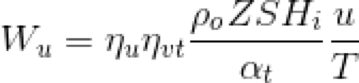
Where Z stands for the number of pistons. With pistons and their associated components reduced in size, each of them is light compared with the single-cylinder solution, allowing the engine to operate comfortably even at high engine speeds with contained mechanical stresses. What is more, with such compact dimensions the combustion chambers are compact too, guaranteeing a high compression ratio and therefore more efficient combustion. As with every technical solution, there is always the other side of the coin. The greater the number of pistons, the bulkier and heavier the engine. The total surface area of the cylinders is greater, with a consequent greater dissipation of the energy produced by combustion. Sliding friction between piston and cylinder increases, causing a worsening of mechanical efficiency, even if this is offset by the greater power delivered. And that is not all. In order to underline how important it is to think in terms of the total area of the piston crowns rather than in terms of displacement, a parameter known as specific area power output is defined, given by the ratio between useful power and the overall area Z x S. This parameter defines the performance of the engine in question and classifies engines according to its value (the higher it is, the higher the performance of the engine); it also makes it possible to compare different engines with one another. Here too, the parameter confirms that a greater number of pistons generates more power, for the same mechanical, thermal and fluid-dynamic performance of the engine.