
Drive, or more properly tractive drive, is the transmission of the driving force generated by the engine to the wheels, thanks to which the vehicle is able to move. In the automotive world, every manufacturer has the option of choosing between three types of drive layout, according to the kind of car it intends to offer. The choice is made depending on whether the car being built is a city car, a sports car or a vehicle able to tackle rough terrain. Here are the three cases:
- Front-wheel drive
- Rear-wheel drive
- All-wheel drive
Front-wheel drive
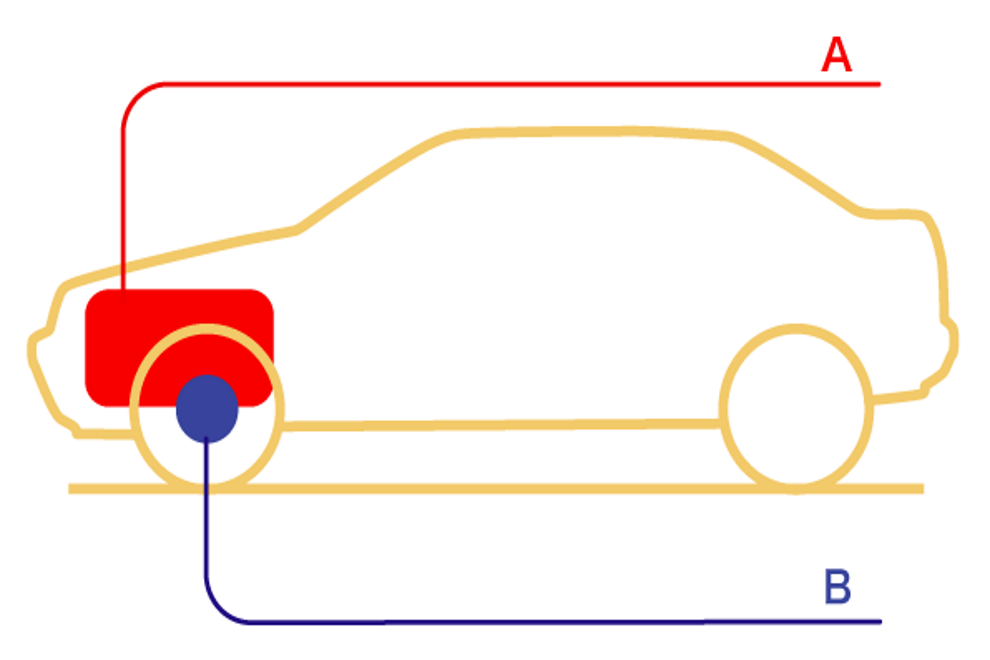
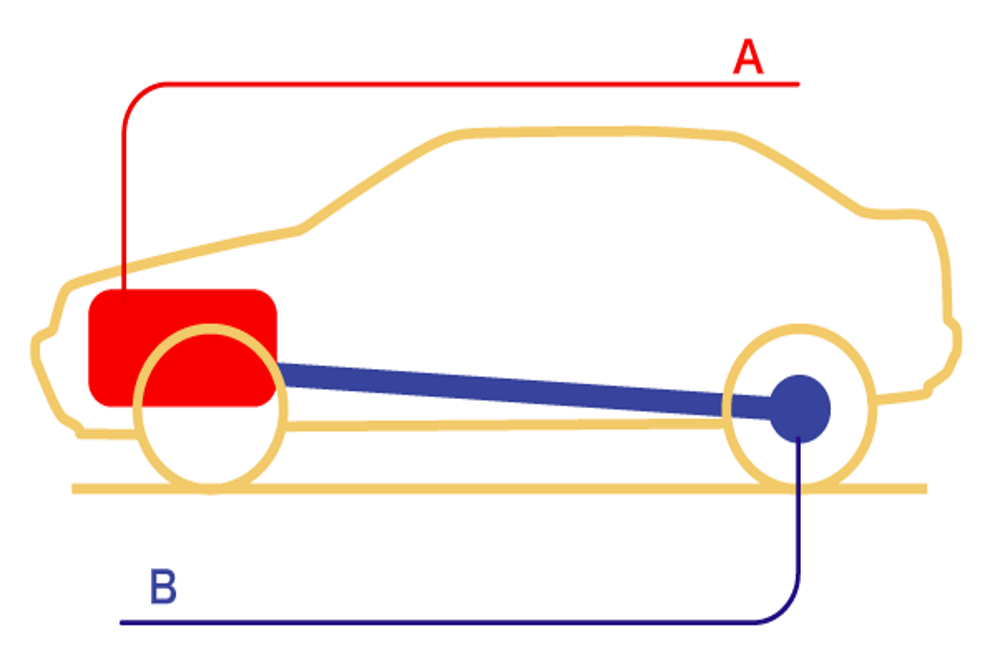
Drive is transmitted to the front wheels. Front-wheel drive is the layout most commonly used on city cars, because a car with this characteristic can be kept well under control even by an inexperienced driver. If the driven wheels lose grip, in fact, the car does not become unsettled to any great extent and the driver can therefore recover the line by adding steering lock. In these conditions the driver can take the corner on a wider line at reduced speed, thanks to the already turned wheels slowing the car down: this kind of driving behaviour is called understeer. The opposite case is oversteer, that is when the car turns into the corner more than it should, sliding or spinning. This happens when the load transfer (the shifting of the car’s mass) onto the front axle under braking is such that it reduces the purchase of the rear wheels, causing a loss of grip and a possible slide. Sharp acceleration can reduce grip at the front wheels, causing the tyres to spin. (In the drawing, the front-wheel drive layout: A-Engine B-Drive)
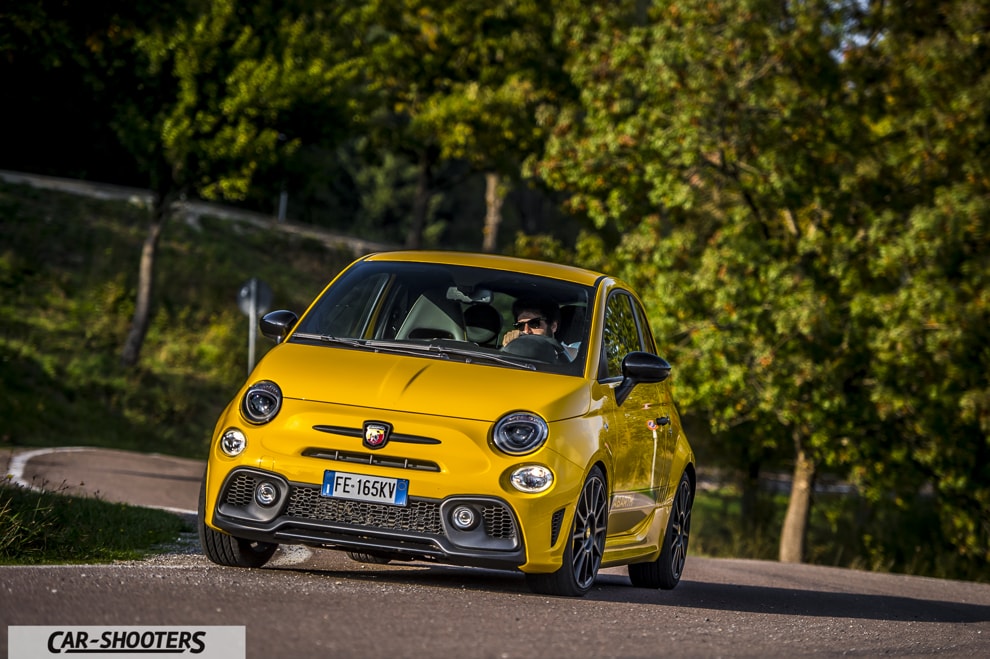
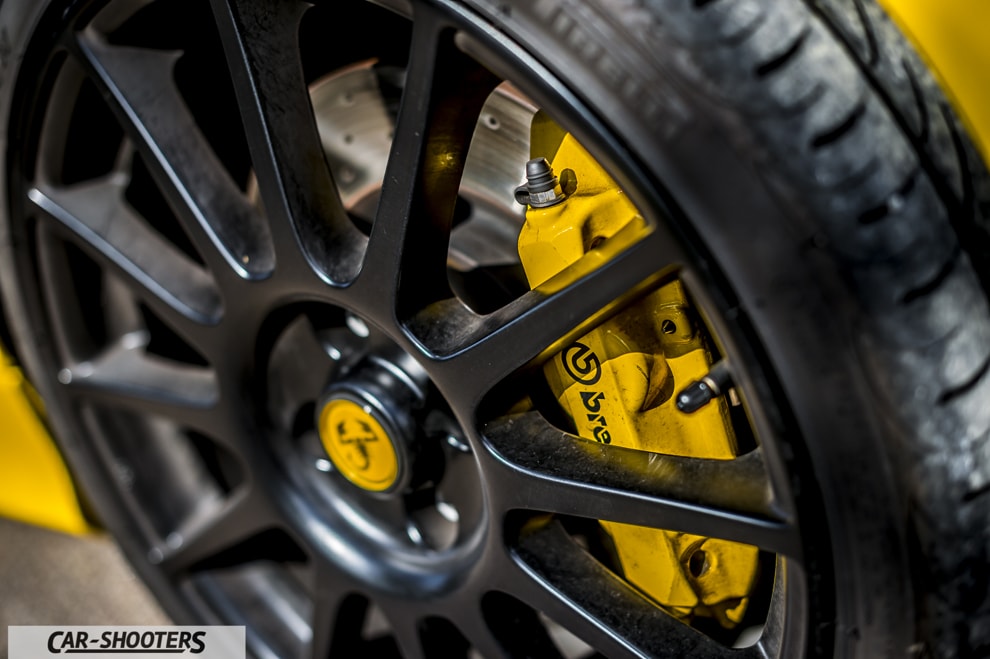
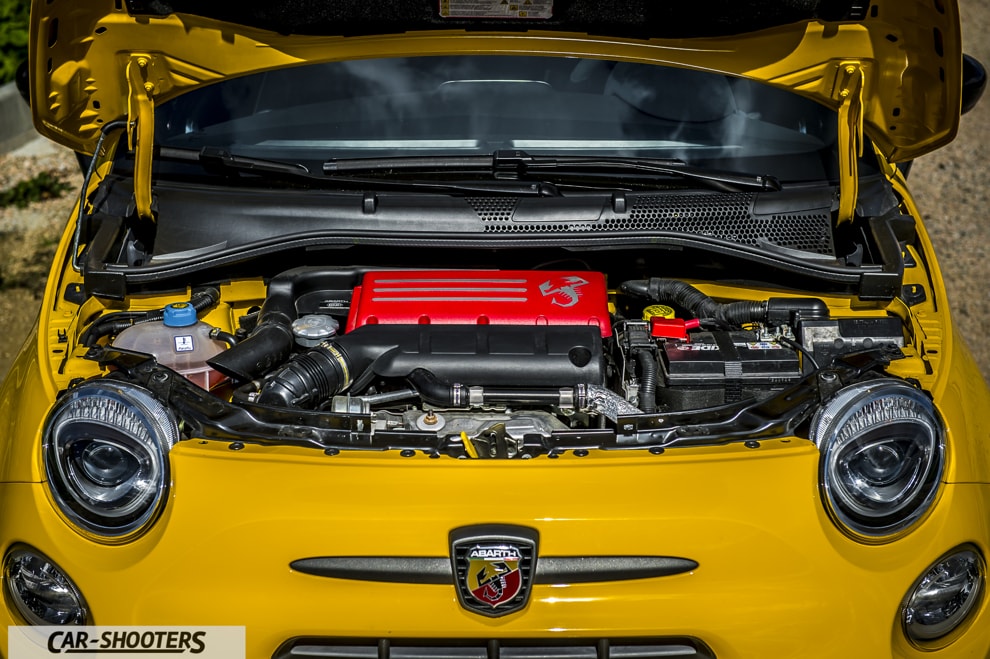
Another advantage of front-wheel drive is the absence of the propeller shaft (the component that transmits motion from the engine to the differential), usually fitted to rear-wheel drive cars. This makes it possible to produce cars that are cheaper to build, with a reduction in weight as well compared with other solutions. It is also true that the front wheels, as well as being driven, are the steered wheels too, and the simultaneous presence of driveshafts for the drive and track rods for the steering close to them limits how far they can be turned compared with rear-wheel drive cars. In the photos, a front-wheel drive car: the Abarth 595 Competizione (click here for the full article):
Rear-wheel drive
Drive is transmitted to the rear wheels. Rear-wheel drive is adopted for cars with a sporting character. This is because under acceleration the load transfer shifts onto the rear wheels, increasing their purchase on the road and, consequently, grip. Standing-start acceleration also improves compared with a front-wheel drive car. Through corners the car behaves better than a front-wheel drive one. (In the drawing, the rear-wheel drive layout with front engine: A-Engine B-Drive)
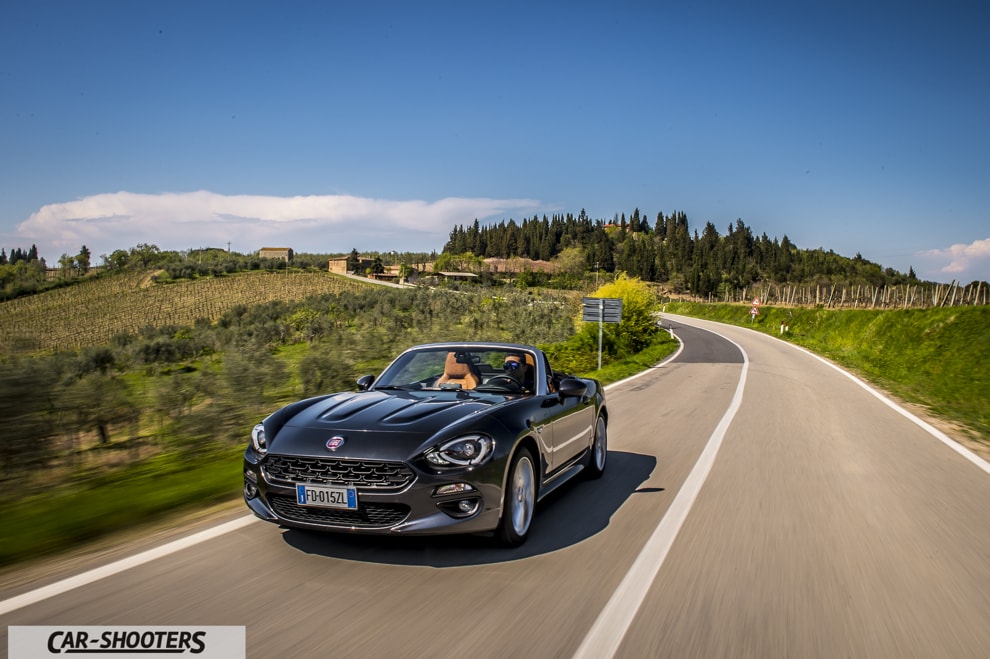
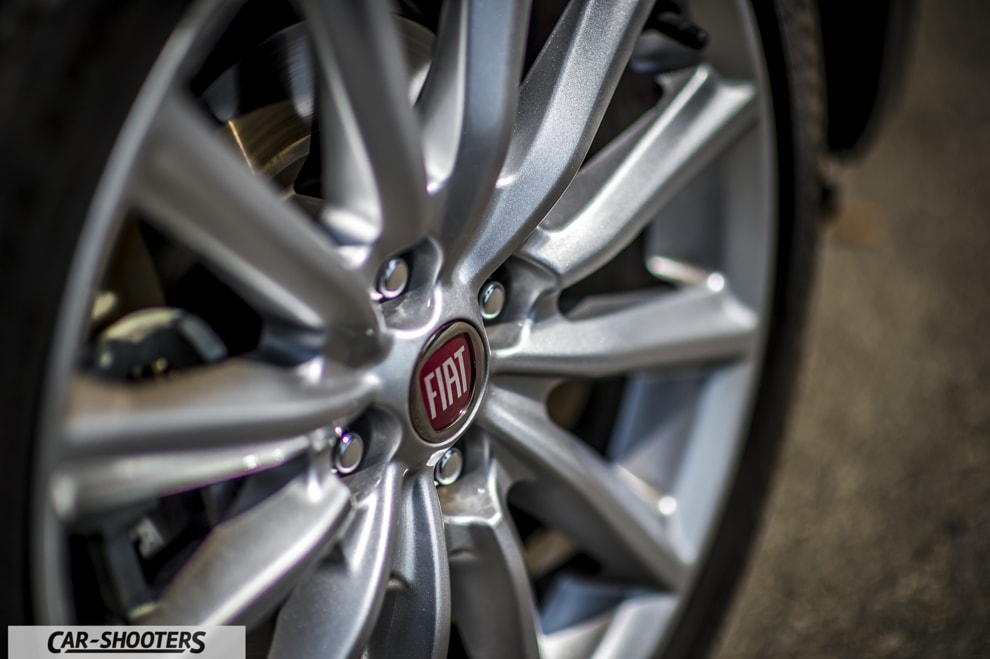
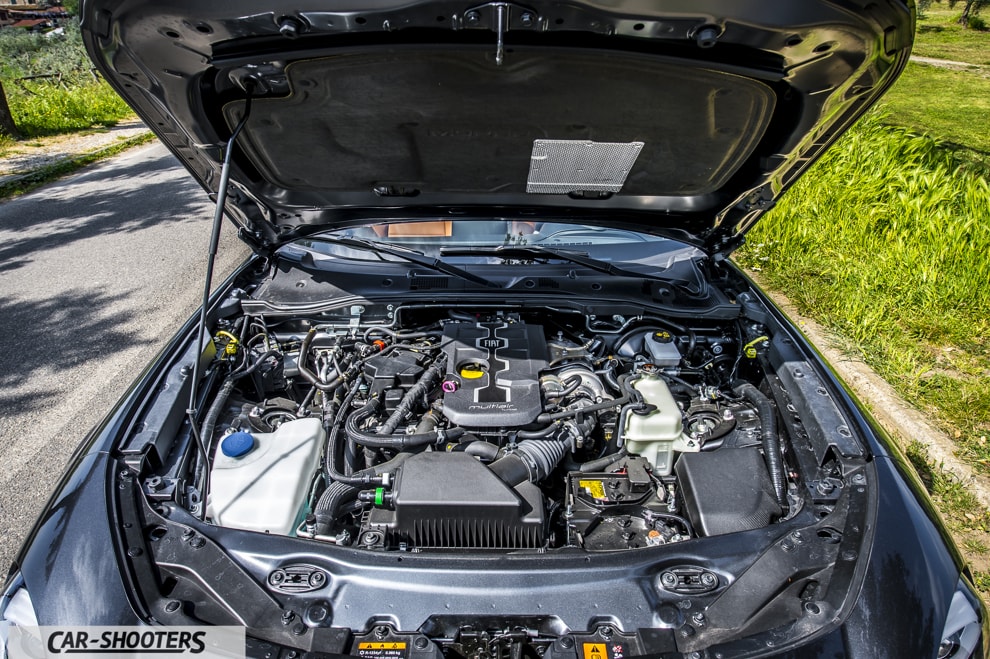
The driver has full control of the car, since the front wheels have more room to steer and only the job of pointing the car, while the rear wheels have the job of pushing it under acceleration. Acceleration has to be metered carefully by the driver in order to avoid oversteer, in this case caused by an excessive purchase of the wheels on the road, enough to exceed the grip limit of the tyres. Recovering from that oversteer proves complicated and calls for an experienced driver, able to straighten the car with the necessary sensitivity on opposite lock and on the pedals. Rear-wheel drive cars may also require a propeller shaft, if the engine is mounted at the front. That brings additional cost and weight. In the photos, a rear-wheel drive car with front engine: the Fiat 124 Spider (click here for the full article):
All-wheel drive
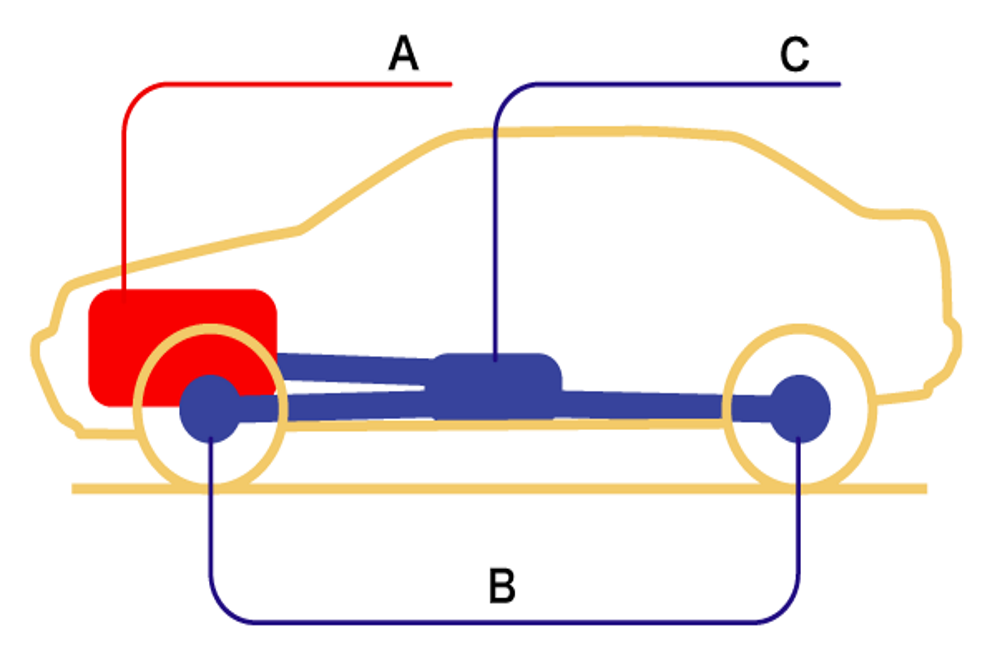
In this case drive is split across all the wheels by means of a torque splitter, a mechanism that gears and distributes torque across the two axles according to a set ratio. All-wheel drive used to be employed mainly by off-roaders, in order to tackle dirt tracks and difficult terrain. Over the years all-wheel drive has been applied to road cars as well, since it guarantees better control and handling than the other types of drive layout. (In the drawing, the all-wheel drive layout with front engine: A-Engine B-Drive C-Torque splitter)
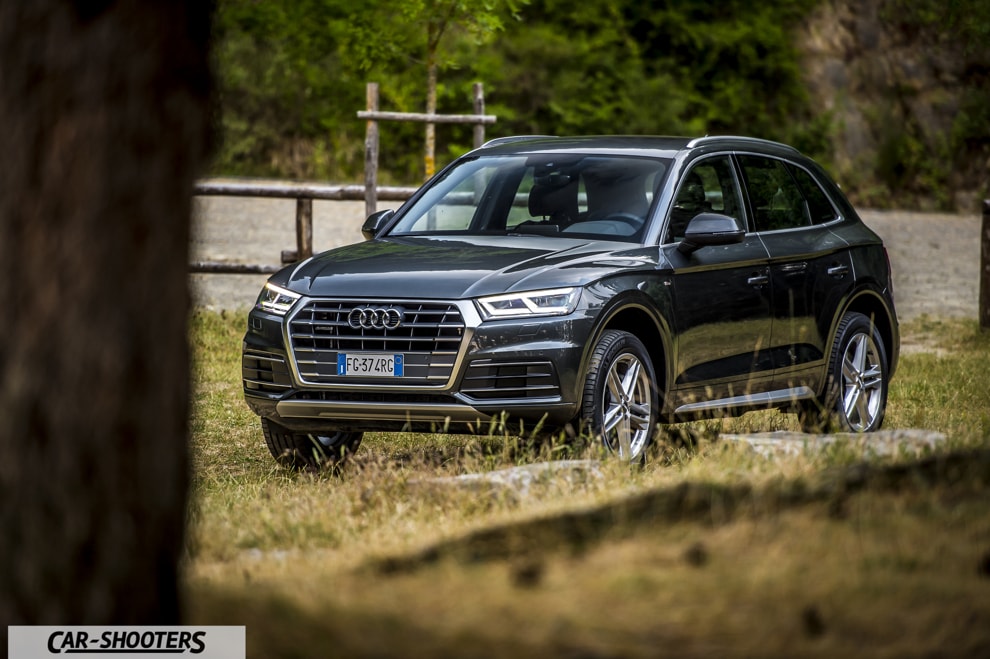
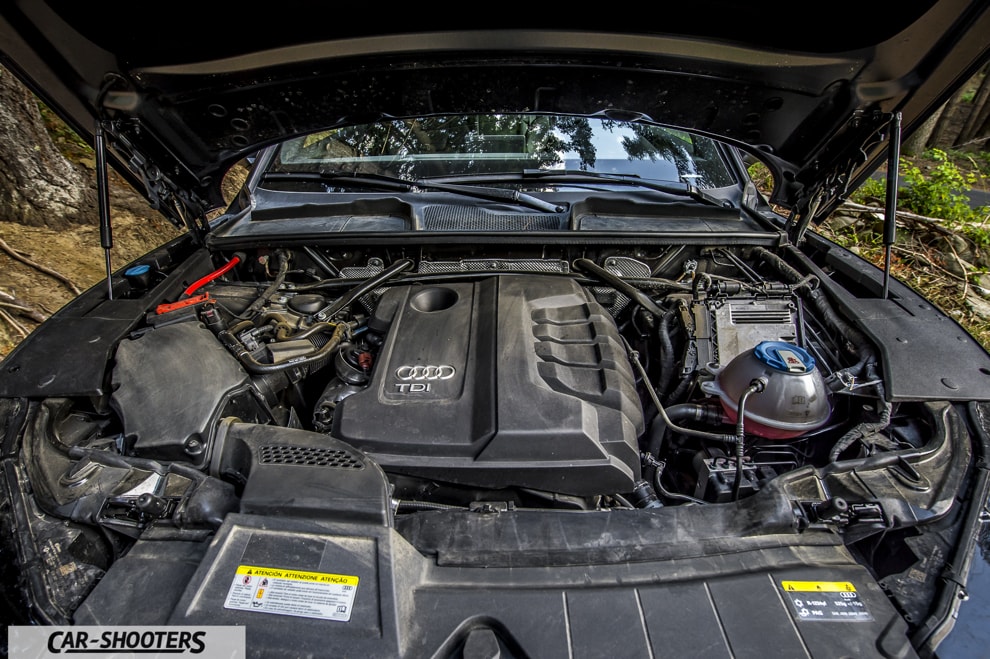
How can one not think of the Group B Audi Quattro that made its mark in the World Rally Championship, or of the Audi A4 in the various Super Touring championships. In these conditions it is difficult for the car to lose control. Understeering or oversteering tendencies may still be present, depending on how torque is split. However much this type of drive layout may help to improve the way a car can be driven, the use of a torque splitter and of a greater number of driveshafts and propeller shafts than in the other cases makes all-wheel drive a solution that brings a further increase in cost and weight. In the photos, an all-wheel drive car with front engine: the Audi Q5 Quattro (click here for the full article):